Wednesday, 11 January 2023

Four Poems in Poems India

Happy New Year dear Readers.

Today, I come bearing a jar full of poetry recently published by Poems India. They call the collection: Poems by Arti Jain. I'm thrilled, of course. 

Here they are for your reading pleasure and comments:


Racism at a Concert

I pick pebbles

from riverbeds and distant shores

mark them with names: places they were picked

and arrange them on my desk,

windowsills. Indelible bookmarks of a day in the sun, family

fun. Holidays far from home.

Kashmir, Chicago, Cyprus.


Holidays. Homes. Hiraeth run parallel. They never intersect.

We dismiss one to seek the other and yet,

it’s always home sweet home.


Nomads seeking oases, unable to dismiss that deep primal urge

to label, to tether stones,

humans, skins, accents

to “But where do you really come from?”


When you pushed me to get ahead

and shouted “Robbie’ at the Robbie Williams concert,

you turned me into a dry riverbed

stone, alone—

no arms to protest or mouth to shout: STOP! Back off!

You pushed me off like I was nothing.

Just brown.


Ahimsa taught me to always step back.

And I instinctively did.


“Do you even know the lyrics!” you scorned

from your great height of privilege built on so many wrongs—

your colonial conditioning distorted to suit your narrative

to disguise racism in convoluted logic.


“Does it matter?” I responded above the din.

You didn’t respond. How could you?


It was the call of an ancient river that plunged me into action.

The mountains in me, my Himalayan pedigree

avalanched me free.

Curses to Gandhi’s other cheek.

When stones on riverbeds move, they change

courses, they move mountains to oceans, rocks to sand.

Shocked, you asked, “Why did you push me?”

“Because you pushed me first.”

I uttered matter-of-factly.


It felt so good to reverse my flow and glow,

grow back into my fullness,

my humanity, into my fierce Kali and Shakti

into my voice, my history, my identity.

You couldn’t push any further so you hollered ‘Robbie’ from your spot.


The next morning, I scrubbed all the pebbles clean,

even the ones marked with permanent ink.
****

Pink Himalayan Salt


Deodars tall. Tall and rock-hard.

Soft, the softest mist on mountains melts

you into me—

hidden half, in full view

those valleys and those peaks.


I sprinkle pink Himalayan salt

on sliced tomatoes, freshly washed rocket leaves.

Our memories.


Daisies must’ve filled the crevices

of all or at least a few promises

of bright sunshine skies

buried deep in the dirt

of my birth-earth.

Softly, like a whisper, the bees must’ve gathered

sweet nectar

from flowers ready, taut.


Dinner’s ready. I call out.

We sit to eat.

The Sufi CD plays incessantly.

If God is anywhere, He’s in Music.

He must be.


Spittle flute. Hot air.

Passion escapes the clarinet.

Notes high, low, whisper soft.

Sighs. Delicious deep, pink—your lips

trace my contours—goose bumps

grains of salt, salty my body

expectant, ready.


What’s bread without salt?

What’s us without the love-making?


We’ve played the waiting game ever since

the surgery. It cured your cancer.

“Lust for life is a good thing.” The surgeon had said.


If God is anywhere, He’s in Music.

He must be.

Perhaps a prayer then

to bring us back—

to how we used to be.
****

Pretend he's not Real


Plant your gaze on anything but his face.


His face—less than ten

in years lived holding orbs

cave-rimmed

dark, deep.


At the traffic signal.

Your car hums a cool song at 42 degrees Celsius.


Pick up your phone and stare at the screen.


His eyes, masterful handlers, will tug

at your gut: Fasting to fit into a new dress.

His eyes will read you. Quick. Hide. Disappear from his gaze— Kohl

Shade—street hardened arrogance.


Put your hand up to wave him away but DO NOT establish eye contact.


He'll linger at the curb and turn the fan tail

on his bright baseball hat and swing

it so well, you'll want to peek.

Be Warned! DON'T!

If you do, the kohl will hold you hostage.

You'll want to help him.

Offer him change. Since you don't carry small notes, you'll decide a coffee

is money better spent.


Pray the lights turn green soon.


Because


he'll open his shop of kohl and plead "Please Miss—I haven't eaten in three days." and you'll be able to hear him.

Ignore. Ignore. Ignore.

Smother any stirrings. Think of the dress. The dinner. Look at Google maps instead. Starbucks.

Anything that separates.

Them and Us.

Red snake awaits ahead. You have no patience for children who beg. You know it's a scam. You do enough to help others, you tell yourself.


Pretend he's not real and move on.

Green means go.****


Devi Divine of Garden Pots


Devi Divine of garden pots (and patch of green plot)

stood verdant

resplendent

at my dehleez and said

Your garden, my child, is full to the brim.

I’ve done what I could

with hibiscus and neem.

Not forgetting frangipani, of course.

She holds, like all my creatures, the fragrances,

the essence of the first

the first kiss on Earth.

I’ve decked the bougainvillaea in Rani Pink.

And the buxom Madhu Malati, that shy blousy thing, has woken to the soft,

heady, steady, summer's first wink.

The oleander will intoxicate you just like I’d planned she would.

And mulberries are ripe. Pay heed.

Eat them. That's their need.

Their purple will stain you, your tongue, your floors, your soul

with the first— the very first

hint of a tint of this world.

I’ve put on a show like I do every year.

You’re their gardener.

But I’m your keeper.

The grass, the dew, and all the earthworms who renew

my soil. Your toil.

I leave in your nigrani.

Keep them. Shower enough paani.

Work is worship

My child—

Worship more.

Worry less.

****
You know I'd love to hear from you. I also know I've become an intermittent blogger lately. I guess it's the nature of my being--I meander through poetry and posts but eventually find my way back to where I started my writing journey--here.
I wish you a healthy and peaceful 2023. Keep warm. Till we meet again.

Wednesday, 23 November 2022

The Kashmir I saw -- Part 1


Her hazel eyes, large and curious, peered at us with such intent that they made me feel important--like I had something useful to share, like my life in the city was a curiosity worthy of a story.

Deep in Basmai Valley, in the middle of paradise, a group of us -- trekkers of ripe years and enough worldly possessions sat in a shepherd's hut. 

Warm, worn blankets, still vibrant in colour, were offered to us by the owner. The hut belonged to an old couple. The husband was out with the sheep. The wife offered to make us  kahwa. She wore her wrinkles well. Women and men of the mountains wear their weather beaten badges like mountains wear snow-- effortlessly and naturally beautiful. The way it is meant to be. She would've made an excellent subject for a portrait. 

We sat. We talked. A neighbour, another shepherd, was present as our interpreter. How the people of these valleys--vast in expanse, sparse in human population, communicate without phone signals I do not know. But he was there. As was the hazel-eyed teenager. She too had wandered in from her hut nearby to meet with us. 

I have no photos of the hut or of the Kashmiri shepherds we met that day. Either my phone was out of charge or I was sucked into the cocoon of their life so completely that clicking seemed unnecessary. 

Three months later, when I finally sat down to write about that day, plonked on an extra cushion at the end of our dining table which is forever a mess of books, notebooks and scribbled notes, I figured I'll have to rely on my memory to recreate the scene for you.

Venky, Apu, Manju, Anju, Sachit and I sat on the mud-hardened, surprisingly warm floor in a jagged circle. We had taken our hiking boots off and left them in a dripping, muddy pile by the door along with our walking sticks and poles. It had rained incessantly for the past two days. We'd managed to continue with our hiking plans thanks only to short and timely dry windows. 

 "What did she say?" one of us asked the shepherd-interpreter. The hazel-eyed beauty had whispered something urgent and animated to him.

"She wants to know what you do in the city. What is your city like." his face broke out into a fatherly smile--deep, mountainous wrinkles parting to let the warmth out--his eyes shone like the clear waters of the lakes we'd seen earlier.

We introduced ourselves. He translated for her. She'd watch whoever was talking with such intensity that I had a feeling she was imagining herself in those roles, in those cities. What we perceived as chaos and drudgery and hectic and mundane seemed magical and exciting and unreachable to her--that's what I thought as I watched her drinking in all the information that was being translated to her like a parched traveller stumbling upon an oasis unexpectedly.

Periods of quiet interspersed with her questions, followed by our replies followed by his translation followed by her animated face, eyes and broad smiles. 

"She didn't like school. She quit when she was young. So she travels with her father and uncle with the sheep in these valleys and mountains from spring to autumn. Her mother stays with the older and younger family members in their hometown. All her siblings go to school." the shepherd-interpreter informed us.

No school. No friends of her age. No phone signal. Only sheep, sheep dogs, horses and household chores for company. How does she manage to stay so alive in her curiosity?  Her inquisitiveness lit up the hut. Her questioning eyes turned us into wise travellers. 

It was getting darker. The clouds rumbled. It started raining again.

The kahwa was taking time. Let it be, someone suggested. We had to reach our camp at the bottom of the valley before dark. 

"No. No. Please sit." The hostess, who had been busily scurrying around the hut for ingredients insisted.

"She doesn't have all the ingredients-- she's shy to serve you kahwa without those." explained the interpreter.

"Even hot water will do." we were all grateful for their company, their hospitality, their curiosity. 

The kahwa came in an assortment of cups and bowls--sweet and delicious. The hostess, the interpreter and the hazel-eyed teenager watched us while we sipped and oohed and aahed about how delicious it was. How it was exactly the thing we needed then. 

There were a couple of Japanese bowls too. How come? I wondered. Who would've picked those? Did a Japanese traveller bring them with her? 

The mountains have this effect on me. They say stars shine the brightest in skies where fewer eyes gaze at them. How true that is too. We saw the mighty Milky Way twice in those ten days! I'm left in wonder of travellers, shepherds and explorers who would've walked the same rough terrain, the same stunning pastures, gazed at the same crystal lakes, watched the same wildflowers dance, sat in this same spot as me--before me, will do after I'm gone.

Curiosity connects us. If we were more curious and less cynical about each other, we'd be living in a peaceful paradise. But we choose to weed out curiosity and feed our cynicism in cities and civilizations and call it progress. Our systems thrive on this division of us and them. Imagine a world anthem with no mention of political borders. Can you? Ever wondered if the grass on this side of the border tastes different to the sheep and cattle that graze on it than the one growing across it!

"We are the Bhakkarwals." the shepherd-interpreter informed us. "Ours is a tough way of life. And we don't want our children to do this. We didn't get a chance to improve our lot. But they do. They all go to schools and colleges. After I'm done, my children will not do shepherding any more." 

"Improve our lot." I thought. And here we are--city-dwellers by choice, educated, worldly folk who trek to these mountains, stay in tents, re-connect with  that part of ourselves which lies buried under the demands of our own chosen lives. Granted, there is absolutely no comparison between choice and necessity. We choose to explore these mountains (with all creature comforts) while the shepherds have to keep a watch day and night, in snow, rain and  wind. A shepherd's life in these parts is tough. No doubt.

Even off-the-counter common medicines are not easily available.

Our interpreter's bad back, our hostesses toothache are their realities. Like most human encounters in  remote mountainous parts, our meeting ended with them asking for commonly available pain killers.

Their challenges are real. I get it.

But I still can't shake off the feeling that I wish I could live that hazel-eyed teenager's life for a year, a decade. How would I see me then? This world?

I remember when I was in grade 6, I was convinced that I didn't belong to this planet. I'd imagine a spaceship landing in the middle of our school's hockey-field and a booming voice from the spinning disc demanding me back from my school. For I was a VIP (Very Important Princess) of another planet, the booming voice would explain to the entire school, especially to Bro. Carroll (our school principal) and that I had been sent to planet Earth by mistake. 

What sounds like pure conceit now was simply the effect of watching the film 'Back to the Witch Mountain' on my over active imagination.

I guess I have been trying to escape my reality ever since then!

What is about escape that is so appealing? We, the city-dwellers, escape to the mountains to find ourselves, to connect with that which we loose touch with when we live our day to day lives and yet the one thing that shone most brightly in the hazel-eyed teenager was the idea of escape. For the hour or so we sat in the wood, stone and mud hut of the Kashmiri shepherd, it was her eyes that kept me captivated. Glued. 

Would she be happy to swap lives with me? Or would she wilt like an alpine flower trodden on by a careless trekker?

Would I survive such a harsh life? Could I? 

Escape from our own realities is so delicious. Even the idea of such an escape makes ones eyes sparkle.

Yet, it is this reality that we have to embrace to find that elusive peace of mind. Guru Nanak Dev ji  called it 'hukum rajai chalna, nanak likhiya naal'-- Accept the reality of this moment. This is it. There is no past and no future. This is it. To live in harmony with the laws of nature and not in conflict with that which is--is the way to eternal peace.

The Japanese call this concept of acceptance Uketamo (oo-ke-ta-mo) which means--I accept with an open heart. 

Lalla Dyad -the mystic Kashmiri poetess says:
(quote from the book by the same name authored by Shafi Shauq)

"Why like a blind man you grope randomly?
Stride into your inside, if clever you are;
Shiva resides there, never seek Him elsewhere,
And trust in the word of truth that I say."

Perhaps it is easier to seek outside. 

According to Stephen King (Stephen King on writing) "the easy answer isn't always the truth." Perhaps I'm not not ready to put in the hard work just yet. 

Is it possible, I ask myself, to be as utterly curious about 'who am I' as I am about the mountains and valleys and all those yet to be explored nooks of this beautiful planet?

Perhaps one day all I'll have to do is go inward like Lalla Dayd and then I'll have no need to travel. But I have a sneaky suspicion that it is my travelling and wandering that will take me to who I am -- the ultimate state of  'I accept this moment as it is -- truly and fully'.

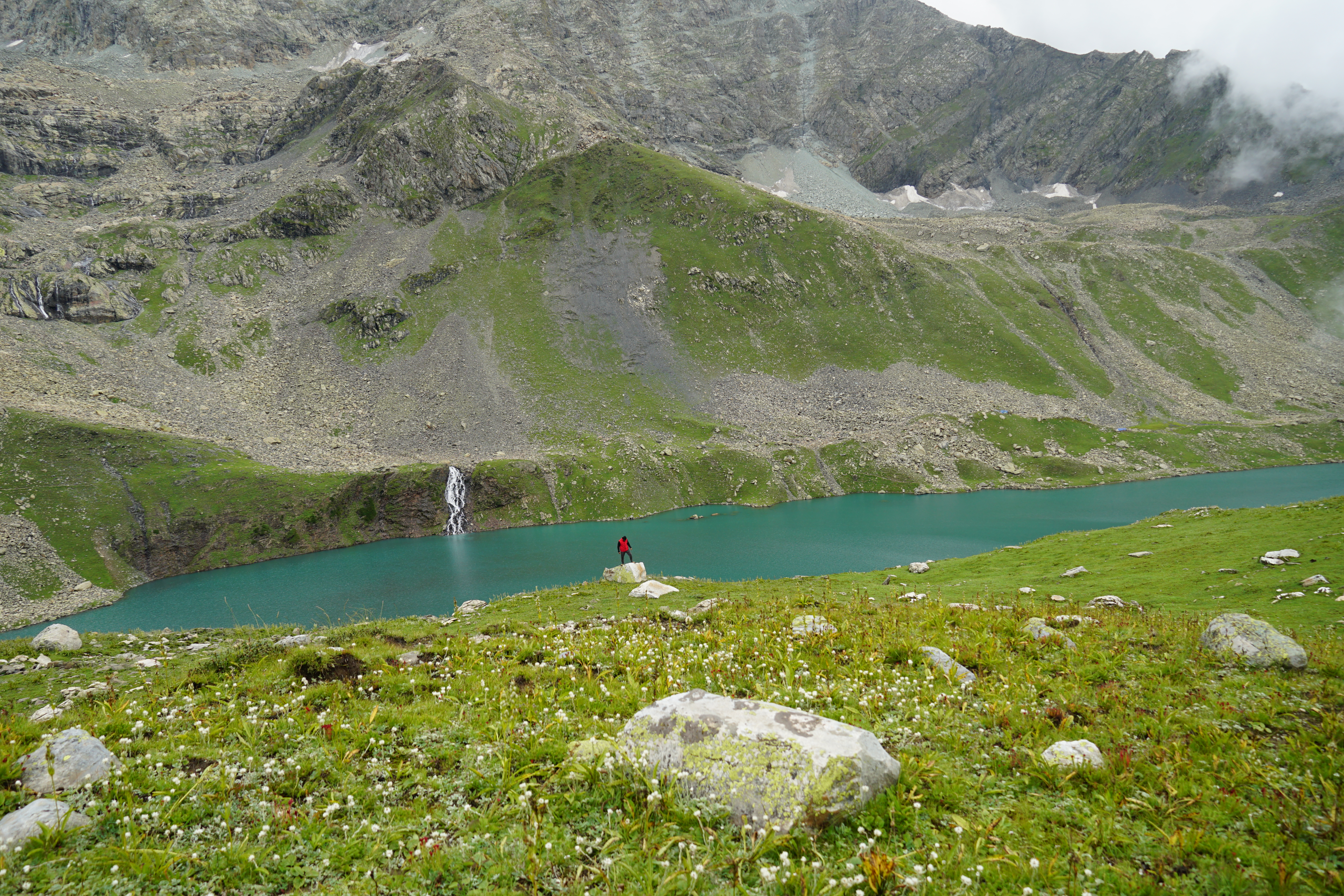
For the next time you're planning to escape to a land blessed with such surreal beauty that it takes your breath away every few kilometres (and not just because of the rising altitude! ) here are a few pictures to help you dream with your eyes wide open. 


My younger self would have deleted the following photo. But in my autumn years, I see how this was meant to be. 

I wish you beauty and peace in being you just as you are in this moment. Till we meet again. Ciao.