

"Odd " was an adjective he acquired that first day at work and it stuck with him for a very long time.
What his colleagues (who hadn't grown up in the India of the 60s and the 70s) didn't realise was that washing machines were not of a mechanical persuasion back home. They came in human forms: kaam wali bai (house maid) or dhobi (washer-man) or mother or wife or father or brother or your own self. It all depended on the matrix of your family.
Clothes were soaked in Nirma washing powder for a couple of hours, then scrubbed and even beaten with a wooden spatula/bat called dummadi. Then the onerous task of wringing the clothes heavy with water followed. Not a problem if it's a cotton shirt but try wringing water from a thick cotton bed sheet. No one needed a gym those days and everyone was always fit. Last but not least, the clothes were hung to dry outdoors, mostly in partial shade to prevent bleaching of coloured clothes and yellowing of white ones.
Compare the above to choosing a setting on a machine, dropping some detergent and a bit of conditioner in the slots and pushing the button to 'wash' your clothes.
Odd indeed. What you don't know, you don't know.
My mother often told us how lucky we were when we were of 'wash-your-own-clothes' age because Nirma and Surf had surfaced by then. In her time, (sounded as Victorian to me as our time sounds to our children) they used to wash clothes with this bar of soap that removed dirt off clothes and skin off palms without discrimination.
One of my favourite laundry memory (yes, I'm a bit odd like that) is when Mummy used reetha (soap nuts) to wash her expensive cardigans at home. The sudsy seeds of this nut are such fun to play with.
But my most favourite laundry memory is about my Grandmother's dupattas. We called her Beji and I didn't know then but she definitely had OCD. Her pure white chiffon dupattas were always white and bright and immaculate. She wore the ones with lace around the edges.
But before I dive into this and one other memory, let me tell why I picked laundry for L. As some of you know, I was in Croatia when the A to Z Challenge started. Lo and behold--L was hanging right there in front of me--and such pretty pictures it made too:)

Sundays were laundry days when I was growing up. On Sundays, Darji (our Sikh neighbour) would sit in his veranda with his kesh (hair) all afloat in the air, looking more like Santa Claus than Darji to me. His turbans hung around him; the cloth open and spread out at different angles on various charpoys in the veranda or flying like flags from the banni (railings) The soft cotton fabric would slowly harden in the sun as the starch put on it would start to dry. I used to watch Neena didi (his daughter) gather the turban cloth (now stiff like poppadoms) and make them into turban meringues --ready to be sent to the press-walla (the ironing guy).

Beji (my grandmother) washed her dupattas herself. She would squeeze out the soapy water ever so softly, her wrinkle ridden hands kneading the watery chiffon so carefully that the two gold bangles on her right wrist wouldn't even clink! Then came my favourite part--mixing 'neel' (a blue dye ). I think it's an indigo extract, but I'm not sure. Just a few drops would plop out of the squeezy sheeshee (bottle) and dive into the shallow bucket, half-filled with water. And like ink, neel would swirl and twirl and make hypnotic patterns. My job was to make sure it mixed well with the water, so that when Beji plunged her white dupattas in, the blue would give them the whiter than white glow and not blue splodges!
Six or seven of her bathed in blue (neel mein nahaye) dupattas would sit piled up on top of each other in baguette like forms waiting to be hand dried. Yes, you got that right. They weren't going to be hung like ordinary laundry on wires of steel and ropes of nylon. No, sir. They were Beji's pride and joy.
Dupatta drying is a two women's job. You need a partner to do this properly.
This was my MOST favourite part of Sundays. My sister or mother or Beji or aunt (whoever was available to partner up) would hold two corners of the wet dupatta. I'd hold the other two (imagine spreading a picnic blanket with another pair of hands). Then both of us (holding to the corners and standing opposite each other at either end of the dupatta) would raise our arms and the dupatta would plump up like a parachute, followed by lowering the arms (still holding the dupatta). Imagine sending-smoke-signal-kinda-arm movements.
Every time the dupatta would come down, it would sprinkle us both with tiny drops of water. I loved that. A tiny patch of dry in the shape of a map would start appearing in the middle after a few ups and downs. Then the dry patch would spread and spread till almost all of the dupatta was dry, except the lace trimmed edges. The corners in our hands would be slightly damp when the adult partner would take over-- swiftly aligning the two edges together to fold Beji's dupatta and deposit it on the pile of other dried rectangles of white as snow chiffon, their lacy rims hanging over the edges.
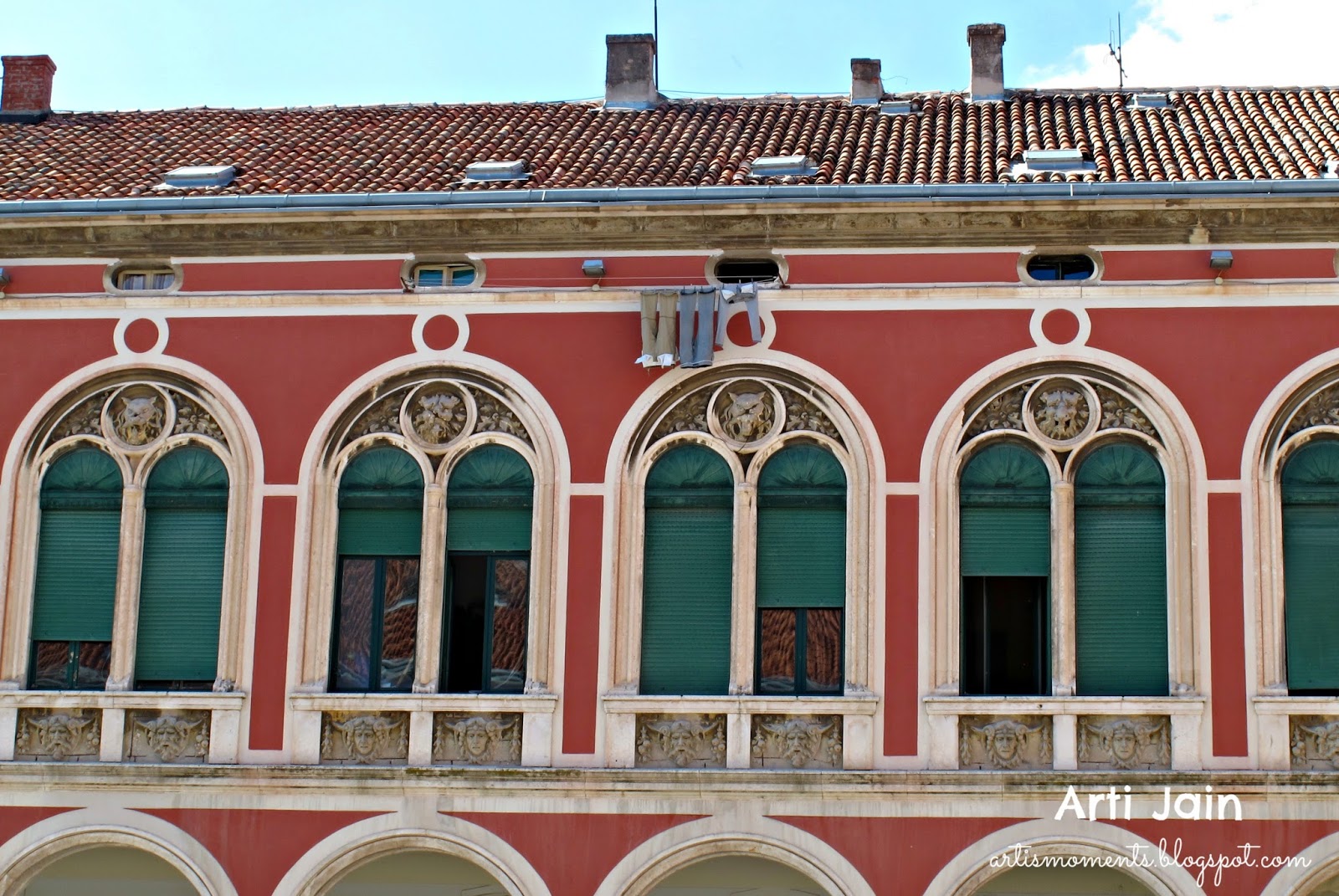


What was your last laundry like?
Any mishaps you'd like to share?
Leaving you with a picture of a lighthouse...as long it's L, it'll do.
These pictures were taken in Split and Dubrovnik in the first week of April, 2017

Make hay when the sun shines or enjoy a Martini if it doesn't.
Meet you here tomorrow:)

